Status. No centre is operating yet. Our first proposals are with funding offices for review. What follows is the model we would deliver under contract, and the terms we are prepared to sign. We are ready to begin as soon as a centre is funded.
The model: the funder owns, Greenroot operates
The recurring failure in publicly funded empowerment projects is what happens after commissioning. Capital buys the building and the machines, the ceremony takes place, and within a year the facility is shut because nobody whose income depends on it is responsible for running it.
Greenroot proposes a different split. The funding office pays for the centre and the machinery, and those assets are vested in the constituency, the state or the agency, recorded in an asset register held by the funder. Greenroot signs a management and operating agreement to run the centre at its own cost, employ from the graduate pool, buy stems from local farmers and purchase graduate output. If we fail to meet those obligations, the funder can terminate and appoint another operator.
What we take on
1. Facility installation and machinery setup
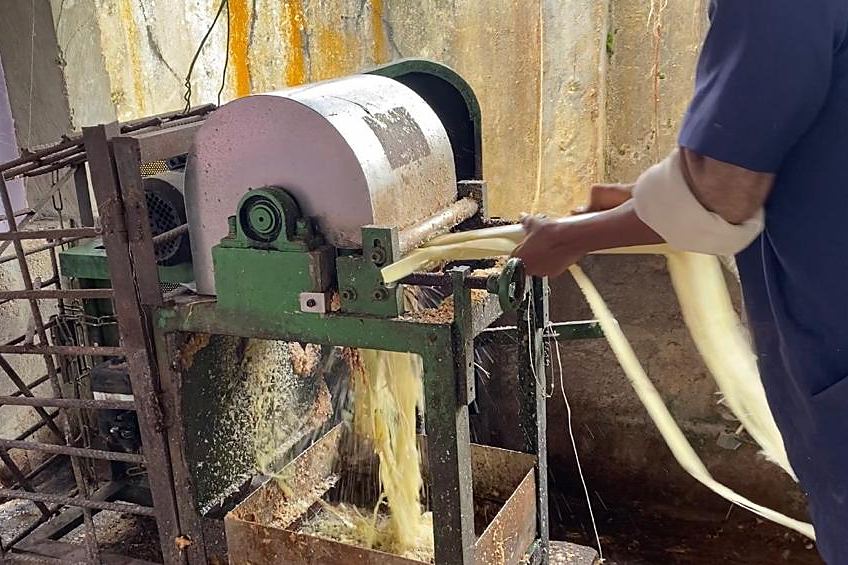
Specifying and deploying decorticators, hackling lines, drying racks, washing stations and weaving benches sized to the pseudostem volume the location can actually supply.
2. Producer training
Structured hands-on training for women and youths in fibre handling, grading, weaving, stitching, footwear assembly and mushroom cultivation, ending in certification and a stream-specific starter kit.
3. Buyback of graduate output
Greenroot buys qualifying finished goods from trained producers at published prices, for a period set in the operating contract. This removes the market access problem that normally defeats these schemes.
4. Operation, maintenance and reporting
Daily production management at our own cost, a maintenance and spares reserve from the outset, and written reporting to the funding office on production, employment and farmer payments.
Accountability is written in, not promised
A ward-by-ward beneficiary register published before training begins, a registered farmer roll, monthly written progress reports, an asset register lodged with the funding office, independent monitoring funded on its own budget line, and a full financial account on completion. We are willing to implement in partnership with a relevant federal agency where the funder prefers that route.
Who we work with
- Federal and state legislators funding constituency projects
- National Board for Technology Incubation (NBTI)
- State ministries of agriculture, and of science and technology
- Development partners and non-governmental organisations
What a funder gets
- Permanent production capacity in the community, not a certificate ceremony
- Assets on the funder's own register, with a copy of every item by location
- Trained constituents with tools and a route to income
- A second income for every plantain farming household in the catchment